
News
Xu Bojun's "Post-Futurism" Work Wins Bronze Award at Italy's Leonardo da Vinci Museum: Reconstructing the Possibilities of Art in the Folds of Time and Space
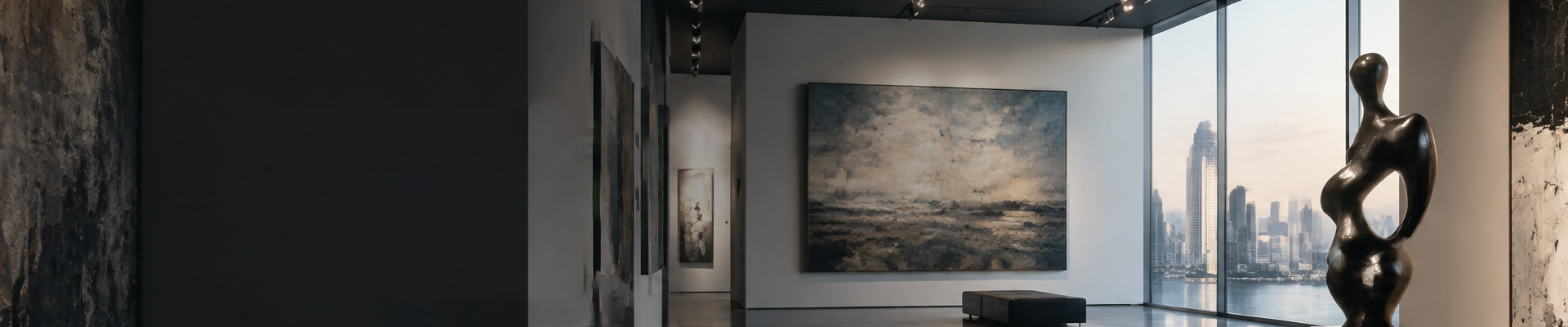
I. Dialogue Across Time and Space: When Da Vinci's Scientific Heritage Meets Eastern Future Imagination On September 8, 2023, the Leonardo da Vinci Museum at the Palazzo della Cancelleria in Rome, Italy, welcomed an artistic dialogue spanning five centuries. Xu Bojun's "Post-Futurism" series work "S.C.No.51", as a representative award-winning entry of the INNOART PRIZE** Art Competition, was displayed alongside Da Vinci's "Vitruvian Man" manuscript and a replica of the "Mona Lisa" in a Renaissance palace. This exhibition takes "implanted curation" as its core curatorial concept, placing contemporary art works alongside Da Vinci's scientific manuscripts to create a "past-future" visual tension—Da Vinci's precise calculations of human proportions echo the flowing dark matter halos in Xu Bojun's images, much like an aesthetic debate across time and space. II. Post-Futurism: Reconstructing Artistic Language in the Material Revolution Xu Bojun's creation breaks the boundaries of traditional media. "S.C.No.51" is completed using mixed media on paper, integrating the blade textures of reduction woodcut, the chemical traces of film developing, and the light effects of digital darkroom processing. Through multiple layers of overprinting, the work transforms the natural diffusion of silver halide particles on photographic paper into a metaphor for cosmic nebulae: the black vortex-like structure in the center of the image resembles both the water vortices depicted in Da Vinci's manuscripts and the black hole models in contemporary astrophysics, forming a "micro-macro" dual narrative. This technical innovation was evaluated by ** Curator Maria as "grafting future genes onto Da Vinci's scientific heritage". III. Behind the Award: A Pioneering Breakthrough in Non-Visual Experience In the eyes of the jury composed of experts from the Rome Academy of Fine Arts and the Bologna Academy of Fine Arts, the award for "S.C.No.51" stems from its expansion of the possibilities of art. Through the uncontrollability of darkroom developing, the work creates a visual field between abstraction and figuration—when the audience gazes at the image, the retina automatically completes those "missing parts" that have not been developed; this physiological reaction precisely echoes the "non-visual experience" theory proposed by Xu Bojun. The jury specifically pointed out that the concept of "time folds" in the work (creating spatial dislocation through the time difference of film developing) forms a cross-temporal academic dialogue with the exploration of "time continuity" in Da Vinci's manuscripts. IV. Artistic Manifesto: From Yunnan Darkroom to Global Vision Xu Bojun's creation is always rooted in the geographical and cultural soil of Yunnan. His studio in Kunming retains a traditional film darkroom, but converts chemical development into digital images through modern scanners; this "analog-digital" mixed medium is like the collision of the ultraviolet rays of the Yunnan plateau and the data stream of the digital age in the image. The faint ethnic totem symbols in "S.C.No.51" gain new interpretation under the wrapping of cosmic nebulae—Xu Bojun transforms the geological textures of the Yunnan red soil plateau into visual metaphors of dark matter, sublimating local experience into ** thinking about human destiny. V. Future Revelations: Finding Humanistic Anchors in a Carnival of Technology This exhibition takes place at a time when AI painting is causing a shock in the art world. In an interview with "Art **", Xu Bojun stated: "My work is not a worship of technology, but a use of the uncertainty of technology to counter the certainty of algorithms." The hand-carved woodblock traces in "S.C.No.51" form a subtle balance with the chemical reactions of mechanical development; this "controllable accident" is a counterattack against the "** reproduction" of current AI painting. As Augusto Biagi, director of the Leonardo da Vinci Museum, said: "Xu Bojun lets us see that in an era dominated by algorithms, the warmth of human handcraft remains the irreplaceable soul of art." This exhibition is not only a milestone in Xu Bojun's personal artistic career but also marks a deep breakthrough for Chinese contemporary art on the ** stage. When the bronze medal of "S.C.No.51" shimmers under the dome of the Leonardo da Vinci Museum, it is not only a commendation for an artist but also a tribute to all creators who uphold the humanistic spirit in the wave of technology—in the gap between algorithms and machinery, Xu Bojun uses the chemical reaction of film developing to leave warm human fingerprints for the future of art.